



Quality Hoops supplies goal systems for schools, parks, and gyms.
→ Browse Official Gymnasium & Park SystemsWhat was the first basketball hoop?
James Naismith invented basketball in 1891 at the International YMCA Training School in Springfield, Massachusetts. The first hoops were peach baskets nailed to a gym balcony rail 10 feet above the floor, so someone had to retrieve the ball by hand after every basket. The bottoms were cut out a few years later. Today's gyms use wall-mounted, ceiling-mounted and portable goals.
The game of basketball, invented by James Naismith in 1891, was initially played with a soccer ball and peach baskets as the first basketball hoops. The simplicity of the game, combined with readily available equipment, made it an instant hit.
James had no clue that his invention would lead to a worldwide phenomenon loved by all kinds of players and spectators.
Evolution of the Basketball Hoop
James Naismith was a physical education instructor at the International YMCA Training School in Springfield, Massachusetts. He sought to create an indoor game to keep his students active during cold winter months.
The initial idea for this recreational activity would have rough beginnings.
The initial target, nailed to the lower railing of the gym balcony, served as the first basketball hoop. These early goals still had a solid bottom, meaning someone had to climb a ladder to retrieve the ball after each successful shot.
The closed bottom was eventually removed, allowing the ball to fall through and lead to more seamless plays. This modification marked a pivotal moment in the evolution of the basketball hoop. While early players relied on temporary fixtures, today's heavy-use facilities demand heavy-duty steel and glass modern basketball goals engineered to handle endless daily play.
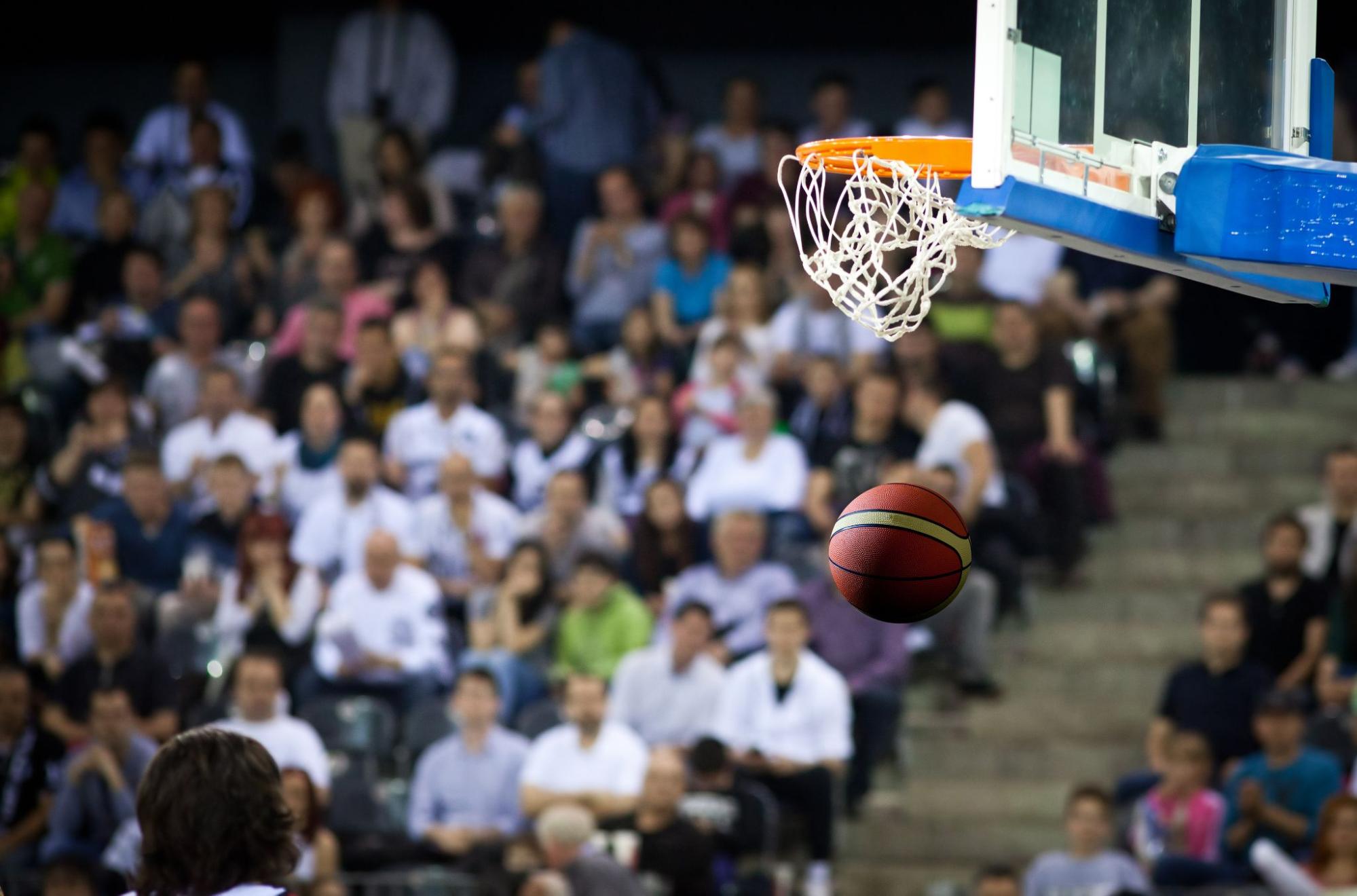
Quality Hoops Commercial Goal Systems
Engineered for high school gyms, park districts, and university facilities. Features shatterproof glass backboards and breakaway rims built for continuous play.
View Commercial Goal Systems →Introduction of Backboards
Naismith’s vision for basketball extended beyond just a game—he saw it as a way to promote physical fitness and teamwork. As the game's popularity grew, so did the need for more durable equipment.
The original wooden goals were replaced by metal rims with netting, a design that has remained relatively unchanged to this day. The introduction of the metal rim was a significant advancement, as it provided a more uniform and reliable target for players.
Backboards were added to basketball goals as the game grew. In later years, the backboard would expand the shooting options of players, from layups to bank shots.
|
Did You Know? Opaque backboards were later replaced by transparent ones so spectators could see the game. |
James Naismith and the Spread of Basketball
James Naismith's invention quickly spread beyond the confines of the YMCA Training School, capturing the interest of many and leading to the establishment of basketball teams across the United States.
James originally had 13 rules which described different ways to move the ball, along with what actions constituted a foul. These rules took inspiration from the following sports:
- American rugby
- English rugby
- Lacrosse
- Soccer
- “Duck on a rock” (A game James Naismith played in his childhood)
James’ role in the development of basketball was not limited to its invention—he also had a hand in developing the first official “basketball” specifically made for the sport.
Basketball's Growth From Casual Play into Professional Leagues
From the original goals, the basketball hoop has undergone significant transformations. This is also tied to the reach and popularity of the sport’s competitive scene.
The simplicity and appeal of basketball led to the birth of professional leagues, culminating in the establishment of the National Basketball Association (NBA). The NBA would go on to become the pinnacle of professional basketball, showcasing the sport on a global stage and contributing to its popularity worldwide.
Legacy and Recognition
The first basketball game was played in Springfield, Massachusetts, where the Naismith Basketball Hall of Fame stands today.
The basketball court, once a simple space with an early hoop at each end, has evolved into a highly technical area. It now works around standardized dimensions and equipment, reflecting the sport's growth and professionalization.
The Evolution of Basketball Hoops
Over the past decades, basketball has grown beyond a casual recreational activity into a national phenomenon. This is why basketball courts have sprung up across different parts of the country.
Basketball hoops have received different variations over the years to accommodate the versatility of installing basketball courts in different spaces.
Portable Indoor Basketball Goals
Portable indoor basketball goals can be set up in any space, from recreation centers to backyards. Unlike their fixed counterparts, these systems feature a base that can be filled with water or sand to provide stability, making them easily movable.
Wall Mounts
Wall-mounted basketball hoops offer a space-saving solution for indoor and outdoor environments where ground space is limited. These systems can vary from simple fixed-height rims to adjustable setups, allowing height variations for different players.
Wall mounts are particularly popular in school gyms, urban areas, and backyard courts where maximizing playable area is crucial. They provide a durable, stable option for basketball enthusiasts without compromising floor space.
Ceiling Mounts
Ceiling-mounted systems can provide more freedom of placement. These systems are attached to the ceiling structure and can be retracted when not in use, making them ideal for venues that host a variety of sports and activities.
Their retractability is a key feature, allowing for easy egress to suit different events, from basketball games to volleyball matches or general assemblies. This is the preferred option for gyms that change layouts through modular adjustments.
Conclusion
The popularity of basketball makes itself known in indoor arenas, such as recreation centers, schools, and community gyms. Schools and community districts continue to include indoor gym facilities in their upcoming plans and designs.
This is where the right equipment can make basketball present and accessible whenever and wherever the situation calls for a match. When looking for indoor mounted basketball hoops and systems for sale, feel free to call the Quality Hoops experts.
At Quality Hoops, we offer the best in hoops, goals, and backboards, including portable indoor basketball hoops, wall mounts, and ceiling mounts. Whether you’re in it for casual play or some serious games, we’ve got the right hoop systems you need.
Quality Hoops supplies goal systems for schools, parks, and gyms.
→ Browse Official Gymnasium & Park Systems


Leave a comment